Our contract has expired, and OEA is currently bargaining with OUSD. As we all know, pay is way too low, which contributes to the high teacher turnover (about 20% yearly), and the raise we won from going on strike in 2019 has not even kept up with inflation. In general, students are grossly neglected in OUSD:
- Understaffing in student support (nurses, counselors, psychologists, reading intervention, etc.)
- Class sizes are way too large (especially in primary)
- Healthcare and benefits are currently not even within the purview of bargaining! They are set by a separate agreement that is not part of our contract.
We are always told that there is not enough money to serve our students, but the reality is that OUSD is flush with money. But this District is top-heavy, with obscene salaries for the suits at the top, and marred by severe financial mismanagement, with a long history of corruption and lack of community oversight. Can we do something about all that? Absolutely! Many unions have scored victories for the common good, not just contractual ones. If we are organized and ready to fight, we can address district priorities, finances, and mismanagement.
The OEA Rank-and-File Caucus applauds the work of all Bargaining Team (BT) members and everyone who volunteers their labor to serve our union. We are a part of this year’s BT and have served on BTs of the past. We want to see this work come to fruition by getting it right.
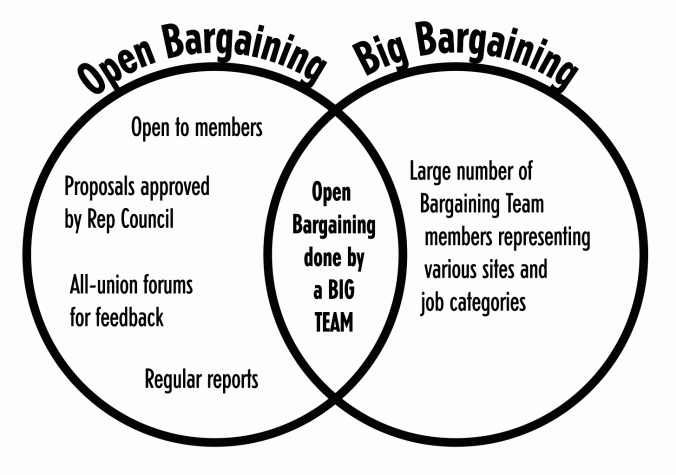
This year’s BT is bigger than ever: more than 50 people who are working hard to write contract proposals and present them to the District. In the November Rep Council of OEA, we heard that a large BT gives us “bargaining power”, since OUSD is “on the defensive,” with its smaller bargaining team. Anyone who knows a bit about the history of unions knows that this is nonsense. In fact, OUSD has rebuffed our offer without batting an eye. OEA’s first proposal included a 22.9% pay raise and OUSD countered with 4.5%.
Our union has been bargaining for over two months, and members have not yet seen a bargaining survey that would determine a baseline of demands we are unwilling to compromise on when it comes to compensation, class sizes, and other major items. Members are not at all involved or informed about the actual process of negotiations, which is kept secret.
Unions have a long history of employing many bargaining strategies, and it points unambiguously to one conclusion: bargaining in secret is a source of weakness, not strength. When members are kept in the dark, they have no influence on the process and can lose faith. The bosses are never intimidated by smart officials or a big bargaining team. They are scared of only one thing: an organized workforce. Throughout history, including in the recent teacher struggles of West Virginia, Arizona, and Oklahoma teachers, the most important factor was not the size of the BT (which has no impact on the eventual contract), but collective action against the bosses, especially strikes. Bargaining results are never decided around the table by the “skill” of negotiators, but only by the amount of pressure the workers can exert on the employers.
Successful bargaining requires that we organize our members to be engaged and involved with our union in a bottom-up, member-driven bargaining campaign. That means that from the outset, all union members are included in the process of developing our BT’s baseline proposals through an All Membership meeting of the union. It requires that union Reps be able to know one another, connect, and have useful discussions through our Representative Council. Crucial, strong bargaining is transparent bargaining. This means:
- Regular reports to members after bargaining team meetings and sessions with the District.
- Member polls on each OEA proposal being considered before it is submitted to the District and before any major concessions are made to OUSD
- Report each new District and OEA proposals in a live Google doc during bargaining
- Livestream bargaining sessions. This is something bosses generally don’t like, and for a good reason: it is in their interests to keep bargaining behind closed doors!
- No side-meetings or communication with District by union officials or BT chairs outside of transparent bargaining sessions
We invite you to join us in fighting for a union where all members have a say in how the district and states allocates resources to students and education workers; a union that involves community members, students and other unions in the larger fight for equitable public education!