Picture this — a Zoom room full of black boxes, disconnected from one another, sitting in silence. Could this be one of our classes in the difficult days of distance learning? This is actually what OEA’s Representative Council has degenerated into.
The meeting structures imposed in 2022-23 have reduced Rep Council — the only body in OEA that brings together members from across OUSD — to a one-way Zoom webinar. Without an open chat or ability to unmute, reps can only connect through channels controlled and seen by union officers. Without a reason to turn our cameras on and see the humans who make up our union, reps miss out on the social and political connection necessary for organizing.
This trend of webinar-style meetings raises the question: What is the point of Rep Council? Its first priority, as democratically defined in our bylaws, is to make OEA policy and to make its own standing rules in order to fulfill that function: “The Representative Council is the policy making body for this Association and is responsible for developing Standing Rules for their internal procedures.” For too long, we have allowed this role to be diminished and ignored.
Announcements and presentations by the officers have a purpose. But we’ve lost sight of the organizing possibilities of our democratic policy-making body. Meetings should be spaces for reps to meet each other, share strategies, debate our priorities, and cultivate solidarity. Democratic process is not an afterthought; it’s essential for any union that hopes to make wins in contract campaigns and beyond.
We should dedicate space and time to these ends, whether through breakout rooms, open discussions during meetings, and facilitating communication between meetings by sharing reps’ contact information, as United Teachers of Richmond (UTR) does. We should treat new business items (NBIs) as the core of our democracy, not as an annoyance, squeezed into fifteen minutes with the remainder relegated to the end of the meeting.
Returning to in-person meetings each month or four times a year (as UTR does) would help reverse the deterioration of Rep Council’s democratic function. We are teaching in person now, because the full potential of teaching and learning is constricted online. The same goes for discussion, organizing and effective decision-making. So why not meet in person?
At the very least, we need to provisionally reform the current structure on Zoom until the Standing Rules Committee presents a proposal many months from now.
Making these changes would help build a democratic culture of discussion and organizing in OEA. Join us to win these reforms, and make our union one that fights from the bottom up!
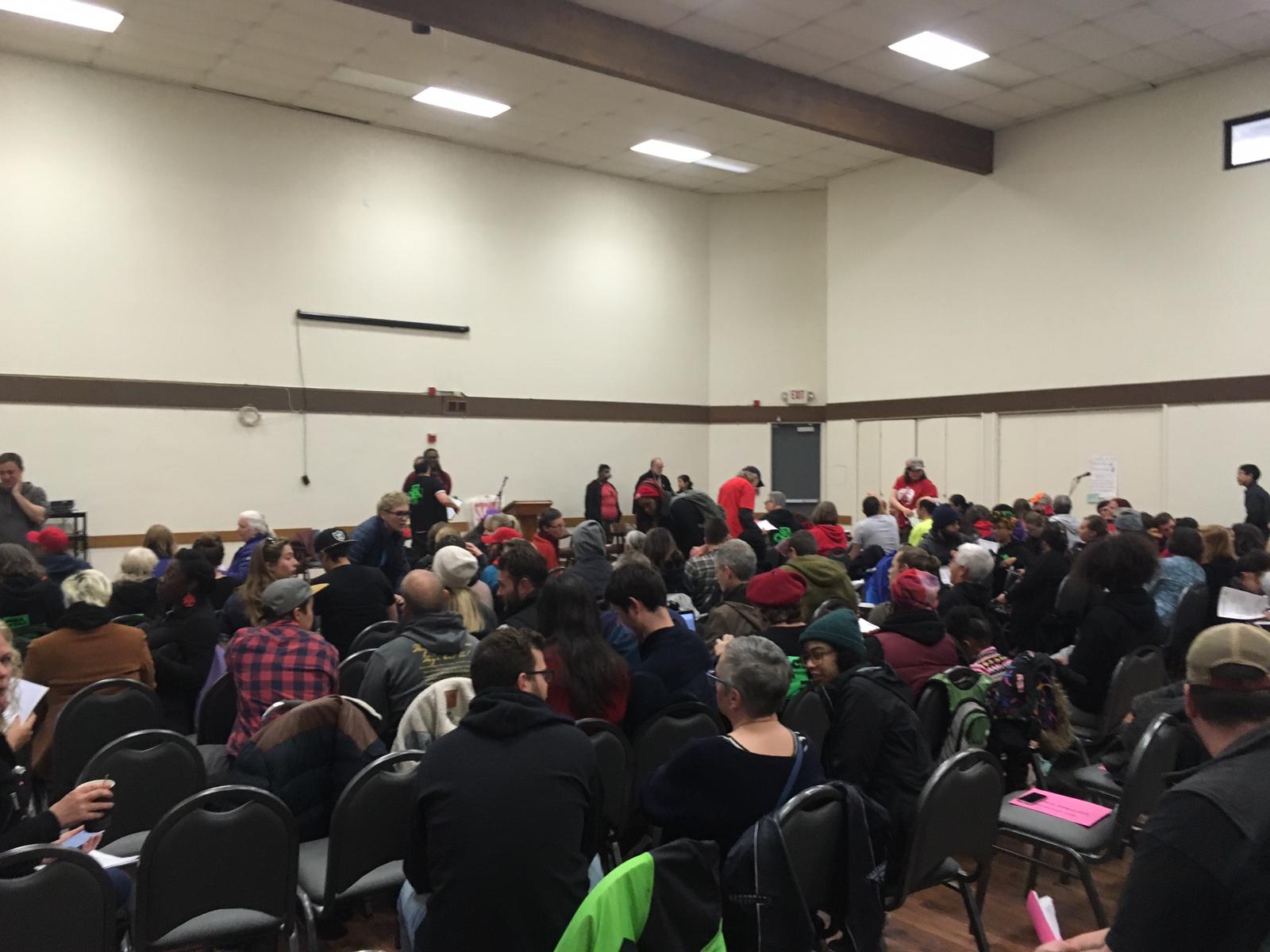
Remember in-person Rep Council meetings??

